
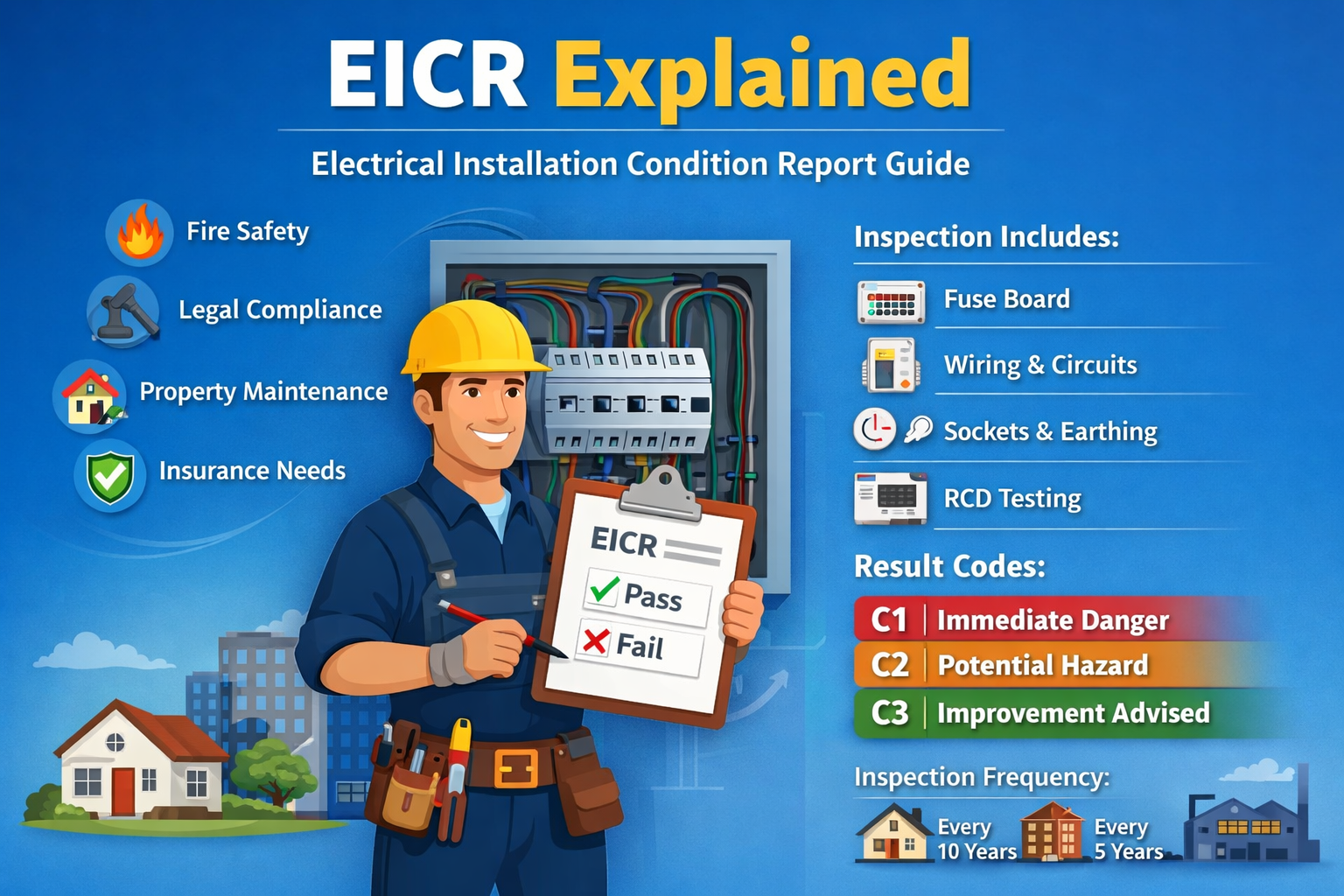
Electrical systems are easy to overlook until something goes wrong. In homes, offices, and rental properties, safe wiring and functioning circuits are essential for preventing fire hazards and electrical accidents. One important way to confirm electrical safety is through an EICR, also known as an Electrical Installation Condition Report.
This article explains what an EICR is, why it matters, how the inspection works, and when property owners should arrange one.
What Is an EICR?
An EICR (Electrical Installation Condition Report) is an official document produced after a qualified electrician inspects a building’s electrical installation. The inspection checks the condition of wiring, circuits, fuse boards, sockets, switches, and other fixed electrical components.
The purpose is simple: to evaluate whether the electrical system is safe to continue using.
After the inspection, the electrician provides a report that identifies:
- Any electrical faults
- Potential safety risks
- Signs of wear or deterioration
- Non-compliance with current electrical regulations
- Recommended repairs or improvements
The report helps homeowners, landlords, and businesses understand the safety condition of their electrical installations.
Why an EICR Is Important
Electrical faults are one of the common causes of property fires. Over time, wiring insulation can degrade, connections may loosen, and outdated components may no longer meet modern safety standards.
An EICR helps address these risks early.
Electrical Safety
The main purpose of an EICR is to ensure that the electrical system is safe for continued use. Faulty wiring, overloaded circuits, or damaged components can lead to electric shocks or fires.
Legal Compliance for Landlords
In many countries, landlords must ensure that electrical installations in rental properties are inspected regularly. An EICR serves as proof that the property meets required safety standards.
Property Maintenance
Electrical systems age just like plumbing or roofing. Regular inspections help identify issues before they become costly repairs.
Insurance and Liability
Some insurance providers require proof that a property’s electrical system is properly maintained. An up-to-date EICR can help demonstrate responsible property management.
What an EICR Inspection Includes
An EICR inspection focuses on fixed electrical installations, not portable appliances. The electrician carries out both visual checks and technical tests.
Typical inspection areas include:
Consumer Unit or Fuse Board
The electrician examines the main distribution board to ensure it is correctly installed, properly labeled, and functioning safely.
Wiring and Electrical Circuits
All accessible wiring is checked for:
- Damage
- Overheating
- Poor connections
- Signs of deterioration
Sockets and Switches
Sockets, switches, and outlets are tested to confirm they are secure, properly wired, and safe to use.
Earthing and Bonding
Proper earthing protects people from electric shock. The inspection verifies that the earthing system is installed correctly.
Electrical Load Capacity
The electrician assesses whether circuits are overloaded or operating within safe limits.
Protective Devices
Devices such as RCDs (Residual Current Devices) are tested to confirm they trip correctly during faults.
Understanding EICR Result Codes
After the inspection, the electrician records observations using standardized codes. These codes explain the seriousness of any issues found.
C1 – Immediate Danger
This means there is a serious electrical hazard that requires immediate action. The electrician may recommend shutting down the affected circuit until repairs are completed.
C2 – Potentially Dangerous
This indicates a problem that could become dangerous if left unresolved. Repairs should be arranged as soon as possible.
C3 – Improvement Recommended
This code suggests that the installation is safe but could benefit from improvements to meet modern standards.
FI – Further Investigation
Sometimes the electrician cannot confirm a fault during the inspection and recommends further testing.
If the report contains C1 or C2 issues, the EICR is considered unsatisfactory until the problems are fixed.
How Often an EICR Should Be Done
The recommended inspection interval depends on the type of property.
Residential Homes
Most electricians recommend an EICR every 10 years for owner-occupied homes.
Rental Properties
Rental properties typically require an inspection every 5 years or at the start of a new tenancy, depending on local regulations.
Commercial Buildings
Businesses may need inspections every 3 to 5 years, depending on usage and risk factors.
Industrial Facilities
Industrial environments often require more frequent inspections due to higher electrical loads and demanding conditions.
What Happens During the Inspection
An EICR inspection usually takes between 2 to 4 hours for an average home. Larger buildings may take longer.
Here is what typically happens during the visit:
- The electrician performs a visual check of the electrical installation.
- Circuits are isolated temporarily for testing.
- Specialized equipment measures electrical resistance, insulation levels, and grounding.
- Each circuit is tested to confirm safe operation.
- Observations are recorded in the final report.
In some cases, the electrician may need access to multiple areas of the property, including the consumer unit, sockets, lighting circuits, and junction boxes.
Who Can Carry Out an EICR
Only a qualified and registered electrician should perform an EICR inspection.
Professional electricians understand current electrical safety standards and have the equipment required for testing.
When choosing an electrician, it is helpful to check that they are registered with a recognized electrical certification body. This ensures the inspection meets professional standards.
Cost of an EICR
The cost of an EICR varies depending on several factors:
- Size of the property
- Number of circuits
- Age of the electrical system
- Property type (residential or commercial)
Typical price ranges include:
- Small apartment: $100 to $200
- Standard home: $150 to $350
- Large homes or commercial properties: higher depending on complexity
Some electricians include minor adjustments or recommendations as part of the service, while larger repairs are usually quoted separately.
Common Problems Found in EICR Inspections
Many electrical issues found during inspections are related to aging installations or outdated equipment.
Common examples include:
- Old fuse boxes without modern circuit protection
- Damaged or brittle wiring insulation
- Missing earthing connections
- Overloaded circuits
- Poor DIY electrical work
- Lack of RCD protection
Addressing these issues improves safety and helps the electrical system meet modern standards.
EICR vs PAT Testing
People sometimes confuse EICR inspections with PAT testing, but they serve different purposes.
EICR
Covers fixed electrical installations, including wiring, sockets, switches, and consumer units.
PAT Testing
Focuses on portable appliances, such as:
- Kettles
- Computers
- Extension leads
- Office equipment
Both inspections are important for electrical safety, especially in workplaces and rental properties.
Preparing for an EICR Inspection
Property owners can make the inspection process easier by preparing in advance.
Helpful steps include:
- Clearing access to the consumer unit and electrical panels
- Informing occupants about temporary power interruptions
- Providing previous electrical reports if available
- Ensuring electricians can reach all areas where wiring is installed
This helps the electrician complete the inspection efficiently.
Final Thoughts
An EICR (Electrical Installation Condition Report) plays an important role in keeping properties safe. Electrical systems naturally deteriorate over time, and regular inspections help identify problems before they become serious hazards.
For homeowners, landlords, and business owners, scheduling an EICR provides clear insight into the condition of the electrical installation. It supports safer living and working environments while helping maintain compliance with safety regulations.
Routine inspections, prompt repairs, and qualified electricians together ensure that electrical systems remain reliable for years to come.